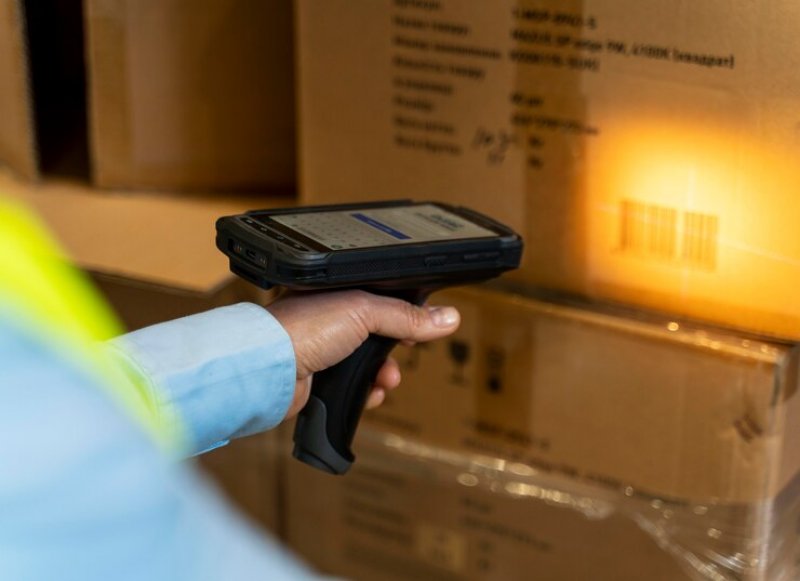
With the rapid advancement of technology, mobility and flexibility have become increasingly important in both the business world and daily life. Handheld terminals stand out as portable devices designed to meet these demands. In this blog post, we will explore what handheld terminals are, how they work, and their various applications across different industries.
What Are Handheld Terminals?
Handheld terminals are portable computing devices, typically the size of a smartphone or tablet, but with specialized functions. These devices can perform various functions such as barcode scanning, data collection, inventory management, field services, logistics, retail, and warehouse operations. Handheld terminals can often connect to wireless networks and facilitate real-time data exchange, enabling users to make quick decisions and enhance productivity.
Features of Handheld Terminals:
Barcode Scanning: Handheld terminals are equipped with integrated barcode scanners capable of quickly and accurately reading barcodes. This feature is utilized in inventory management, point-of-sale transactions, and transportation operations.
Durability: Most handheld terminals are designed for use in challenging industrial environments. Their rugged construction and resistance to water and dust ensure reliable performance in field services and warehouse operations.
Wireless Connectivity: Handheld terminals typically support wireless communication technologies such as Wi-Fi, Bluetooth, 5G, 4G and LTE. This enables the devices to access online systems instantly and engage in real-time data exchange.
Long Battery Life: Long battery life is essential for mobile use, and it is a common feature in most handheld terminals. It ensures uninterrupted use of the devices even during a busy workday.
Applications of Handheld Terminals:
Retail: In stores, handheld terminals are used for tasks such as inventory management, pricing, order picking, and customer service. This enhances operational efficiency in retail businesses and improves customer satisfaction.
Logistics and Transportation: Handheld terminals are employed in warehouse operations, transportation, and distribution processes for tasks such as inventory tracking, order picking, and shipment management. This helps logistics companies optimize their operations.
Healthcare: Hospitals and healthcare facilities use handheld terminals for patient care, medication management, and inventory tracking, among other applications. This improves the effectiveness of healthcare services and reduces errors in data entry.
Manufacturing and Industry: In manufacturing facilities, handheld terminals are used to monitor production processes, manage inventory, and perform quality control. This increases manufacturing productivity and reduces the number of defective products.
Handheld Terminal Manufacturers:
Zebra Technologies: A leading provider of handheld terminals and mobile information systems. Zebra offers various handheld terminals and mobile devices for various sectors such as retail, transportation, and logistics.
Honeywell: Honeywell specializes in industrial automation and data capture solutions. They offer a variety of products including handheld terminals, barcode scanners, and mobile computers.
Unitech: Unitech operates in the field of automatic data capture and mobile information systems. They manufacture handheld terminals and mobile devices for various sectors including retail, logistics, healthcare, and manufacturing.
In conclusion, handheld terminals are essential tools for meeting the mobility and productivity needs of businesses. These portable devices have a wide range of applications across different industries, enabling businesses to optimize their operational processes and gain a competitive advantage.
© Copyright © 2012 - 2024 Bessa Savunma - Design and Software Development Laynart Dijital

